Projects /
Large‑scale project
The resilient landscape is the starting point and the reference framework for all the projects we carry out. We turn strategic planning into concrete actions on the ground by applying the models we promote: we work on planning, forest management, infrastructure development and local economic activation. The result is an integrated, coherent process, from initial coordination to the commissioning of infrastructures and the operational management model.
Implementation
at scale
Large‑scale implementation acts across an entire territory —a valley, a watershed or a landscape unit— to turn it into a resilient, productive and socially active space. To achieve this, we apply scientific and technical knowledge in close coordination with local stakeholders. We consolidate shared governance among administrations, businesses and the local community.
Every project demonstrates that the resilient landscape model is both applicable and viable. We lead complete projects or specific phases of the process, depending on the needs of each territory.
1 / Agreement and initial coordination
The first step is bringing territorial actors together: administrations, landowners, companies and citizens. This collaborative work builds the trust needed to begin.
The Hub team supports public managers, fosters dialogue across the territory, and connects with industries that use local resources, whether nearby or not, to ensure a shared vision and realistic implementation of decisions.
2 / Planning a resilient landscape
Once the collaboration framework is established, we develop the resilient landscape plan using advanced modelling tools. This analysis identifies territorial strengths, environmental risks and productive potential, and lays the foundations for sustainable development.
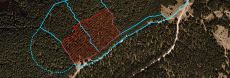
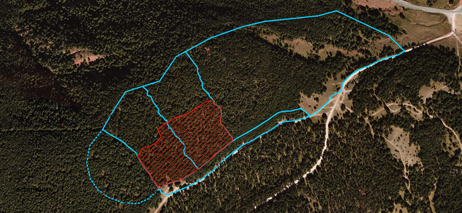
The project developed in Soriguera is a clear example: this approach enabled the definition of an integrated management model tailored to local realities, built on scientific data and knowledge.
3 / Executive planning
With the model defined, executive planning is developed through the appropriate forest and territorial planning instruments. This stage guarantees the technical, environmental and administrative feasibility of the project and ensures alignment with existing territorial and urban planning frameworks.
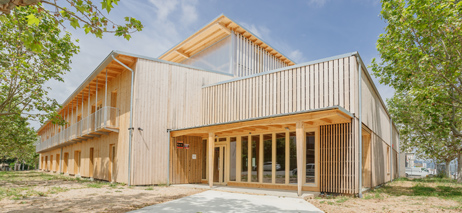
For the Catalan Truffle Producers Association (PROTOCAT), this work resulted in specific instruments and guidelines to ensure orderly and sustainable sector development.
4 / Transformation and infrastructure development
5 / Forest operations and innovation
This phase combines sustainable forest management with technological innovation. Specialised teams carry out planned actions on the ground, ensuring each intervention meets environmental and production objectives. This connects science with practice, turning planning models into tangible landscape results.
Continuous improvement processes strengthen sector professionalisation and knowledge transfer, promoting more efficient, technologically advanced and environmentally responsible management.
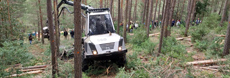
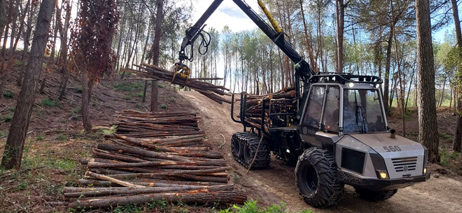
The MALWA light‑mechanisation project demonstrates this: compact machinery enables work in young or hard‑to‑reach forests, reducing costs, minimising soil impact, and supporting the transition toward more resilient and productive forest stands prepared for the bioeconomy.
6 / Business model and productive management
Each project concludes with the definition of its business model and operational phase, ensuring long‑term economic and social sustainability. The approach applies to different sectors: wood, aromatic plants, agroforestry systems, bioenergy and more.
We analyse existing industrial contexts and propose tailored solutions, such as machinery installation or partnerships with local companies.
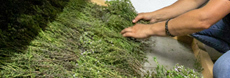
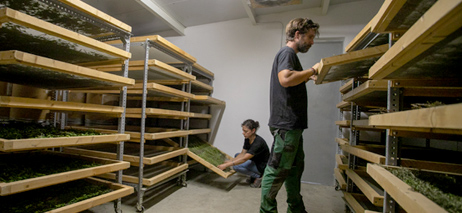
Projects like the Sambucus cooperative show how scientific knowledge can be turned into real employment and high‑value opportunities through the production and marketing of aromatic and medicinal plants, illustrating how the bioeconomy can firmly take root in the territory and generate positive social impact.
The result is a flexible model able to adapt to the specificities of each territory.
7 / Social involvement and local activation
Els projectes a escala adquireixen tot el seu valor quan la comunitat hi participa activament. Per això, promovem l’activació social i econòmica basada en el talent local i en la creació de noves oportunitats productives. Així, la transformació dels recursos naturals i els beneficis derivats es mantenen al territori, reforçant-ne la cohesió, la identitat i la capacitat de generar ocupació i valor afegit de manera sostenible.
At the Forestry Hub, we apply research and innovation to develop new products that maximise the value of agroforestry resources, diversify income sources and ensure the territory’s economic sustainability. The knowledge generated is transferred to professionals and communities through outreach and training.
The Forestry Hub’s green chemistry project shows how research can transform Mediterranean forest biomass into high‑value bioproducts, reducing environmental impact and activating new value chains. This demonstrates how scientific innovation, when integrated with the territory, can generate real economic opportunities and reinforce the local bioeconomy.
Large‑scale projects represent a new way of working: collaborative, science‑based and results‑oriented. Starting from the resilient landscape as a shared foundation, we bring together knowledge, planning and execution to shape a living, productive and sustainable rural future.