Projects /
SAMBUCUS Cooperative
At the Forestry Hub, we support initiatives that connect sustainable management of forest resources with the revitalization of the local economy and the creation of resilient landscapes. One example of this work is the support provided for the creation and consolidation of the cooperative E.I. Sambucus SCCL.
This initiative was born from a commission by the Consorci del Lluçanès to the CTFC in 2011 to study the feasibility of producing and marketing aromatic and medicinal plants (AMPs) in the territory.
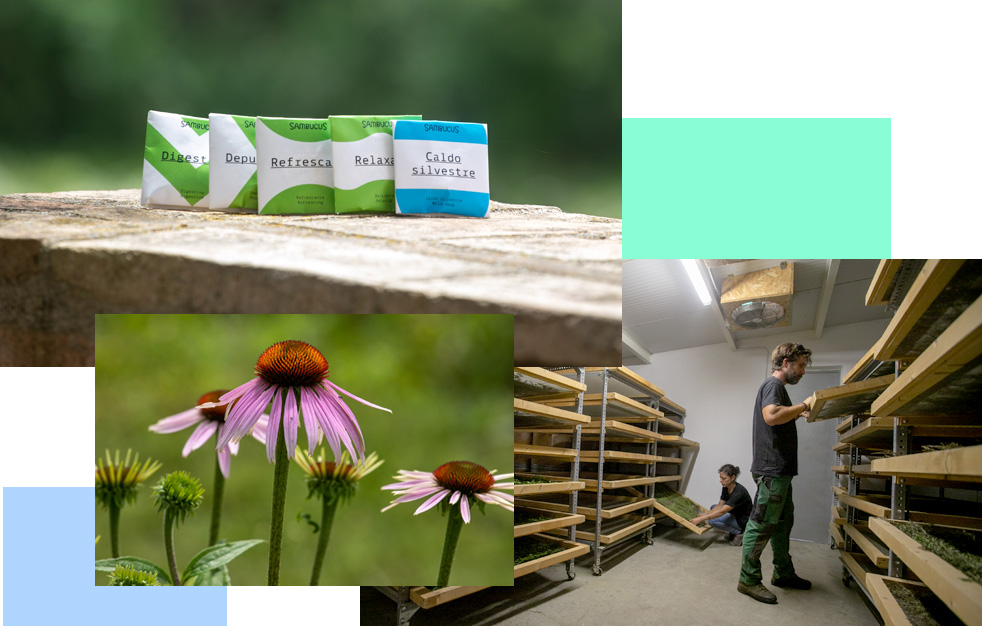
Following fieldwork and an edaphoclimatic analysis, a proposal was developed identifying crops adapted to the Mediterranean context and potential final products, ranging from herbal infusions and condiments to live plants.
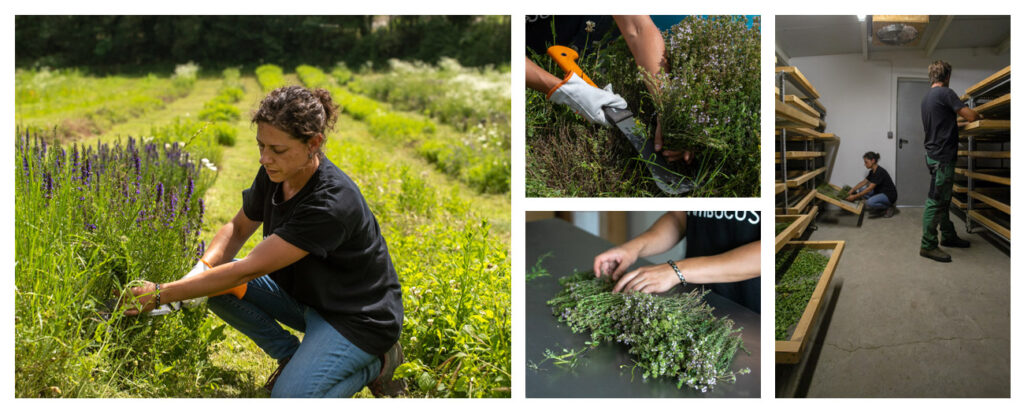
This process culminated in the creation of Sambucus, a worker and social integration cooperative that offers employment opportunities to people at risk of exclusion through the production, processing and marketing of AMPs.
The CTFC has supported the project from its inception, and in 2012 carried out a comparative study of various aromatic and medicinal plant species and shrubs naturally present in the region, with the aim of evaluating their potential as cultivated crops for commercial products.
This work, supported by the Department of Agriculture, Livestock, Fisheries, Food and Natural Environment, identified wild populations and assessed the feasibility of cultivating commercially relevant species. As part of the process, 14 technical dossiers were produced: one on the sustainable wild harvesting of mallow, elderflower and rosemary, and 13 dedicated to cultivation guidelines for aromatic and medicinal species such as lemon balm, pennyroyal, thyme, sage, lavender, tarragon, savory, hyssop, flat‑leaf parsley, dill, chamomile, basil and oregano.
Over the years, collaboration has continued through training and technological innovation. The CTFC has supported Sambucus in improving processing techniques such as drying and essential oil extraction.
In 2025, the cooperative harvested wild thyme from its surroundings, and at the Forestry Hub we transformed this material into essential oil — an initiative that exemplifies a circular, sustainable and territory‑rooted bioeconomy.
Today, Sambucus has become a reference point in the sector of organic and innovative herbal infusions, including their pioneering line of savoury (salty) infusions. The cooperative is now recognised as one of the most sustainable local food initiatives in the country.