Projects /
Association of Truffle
Producers of Catalonia
Amidst a transforming rural landscape and the growing challenges of climate change, the black truffle (Tuber melanosporum) has stopped being a marginal crop and has become a real opportunity. Small producers, entrepreneurs and organisations have found in this subterranean fungus a path toward an activity that is profitable, sustainable and rooted in the territory. But none of this would have been possible without a solid foundation: scientific knowledge.
A clear example of this progress is the work of the Association of Truffle Producers of Catalonia (PROTOCAT), which has joined efforts with the Forest Science and Technology Centre of Catalonia (CTFC) in a shared commitment that has strengthened research, innovation and a comprehensive vision for the development of the truffle sector.
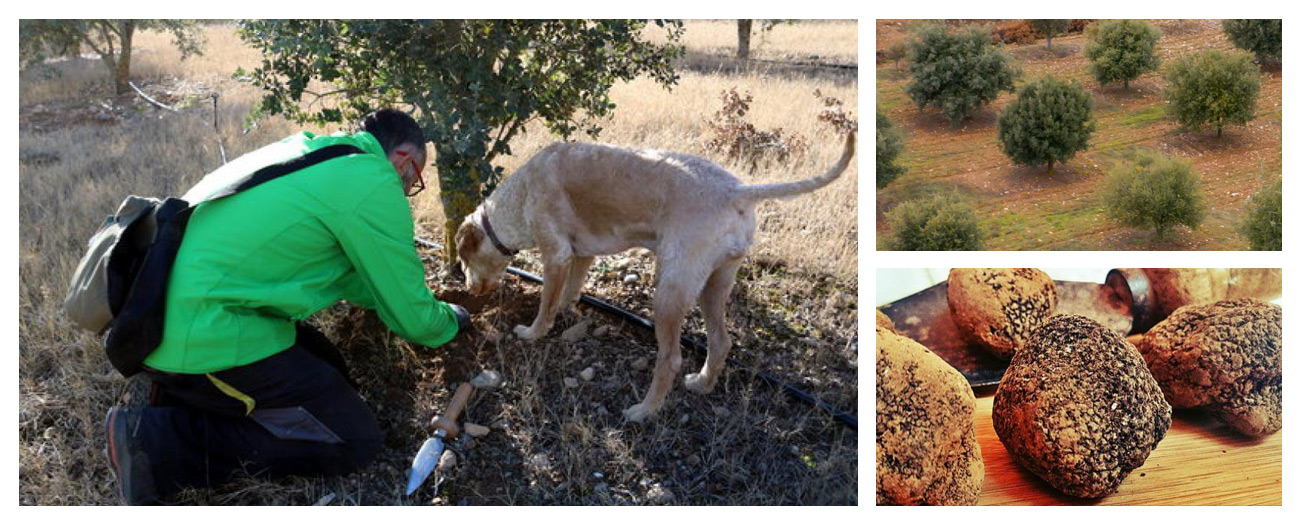
PROTOCAT was founded in 2000 with the aim of bringing together truffle producers and other people interested in cultivating this product in Catalonia. The beginnings were not easy: truffle cultivation was just emerging in the country, and many plantations established during the 1990s had not yet produced truffles. The association was founded by six members committed to the territory, who saw the potential of this crop. Since then, the association has grown steadily and now has more than 160 members, representing 80% of the planted black truffle area in Catalonia.
A scientific perspective
on a unique crop
Black truffle production cannot be understood as a simple crop. It is a complex subterranean ecosystem where microorganisms, host trees, soil dynamics and changing environmental conditions interact. At the centre of this system is the mycelium, the network of microscopic filaments that forms the living part of the truffle fungus. It grows in the soil and establishes a symbiotic relationship with tree roots. This relationship is essential because the fungus provides the tree with nutrients and improves water uptake, while the fungus receives carbon produced by photosynthesis.
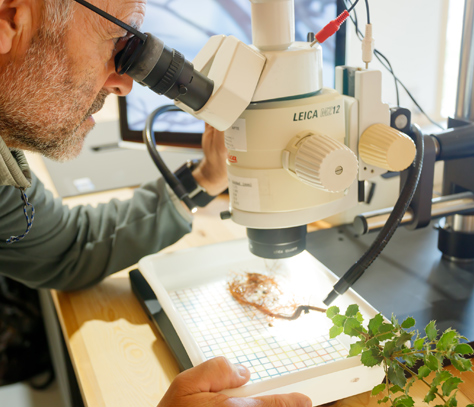
The CTFC has focused research on this entire system, studying essential questions such as: Which conditions favour the development of T. melanosporum? What are the water needs for its production? What can the soil fungal community tell us about plantation performance?
Science
in service of the territory
The research lines have been diverse and complementary. In the field of truffle ecology and cultivation, the CTFC has developed several key elements of modern truffle cultivation. First, researchers analysed the most relevant aspects of T. melanosporum ecology. Then, this knowledge was transformed into practical cultivation guidelines for farmers, guidelines that now underpin plantations worth millions of euros.
The value of this work is reflected in its impact:
- CTFC’s research materials have been read over 51,000 times on ResearchGate.
- The technical manuals aimed at producers have alone been downloaded more than 33,000 times.
These advances have been possible thanks to a strong network of collaborations, both within the institution and internationally, bringing together specialised knowledge from multiple disciplines to decipher the complex biology of T. melanosporum, and more recently of other species such as T. aestivum.
The result?
More truffle soil,
more living territory
Our commitment to transferring knowledge to society has been continuous. From scientific research and management practices to improve truffle cultivation, to supporting producers in solving practical challenges, to promoting truffle consumption across the entire value chain.
A key contribution was CTFC’s role in diagnosing and drafting the “Action Plan for the Development of the Truffle Sector in Catalonia” for the Government of Catalonia. This plan aims to increase black truffle production, boost its consumption, and build a strong, competitive sector.
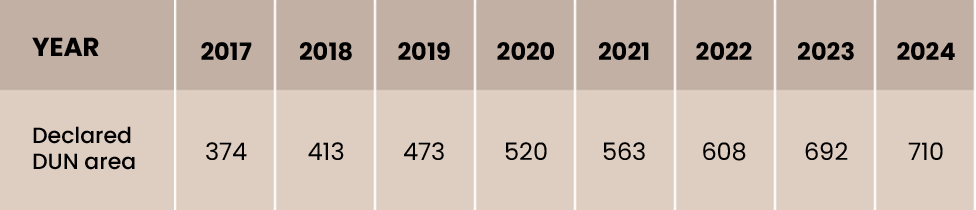
The work has not stayed in the laboratory. In just a few years, the declared truffle area in Catalonia has nearly doubled. This figure speaks for itself:
This not only implies more production, but also more rural activity, more shared knowledge and more young people who see a real opportunity in this sector. Behind every new plantation lies soil diagnosis, the selection of mycorrhized plants, and advice on cultivation management.
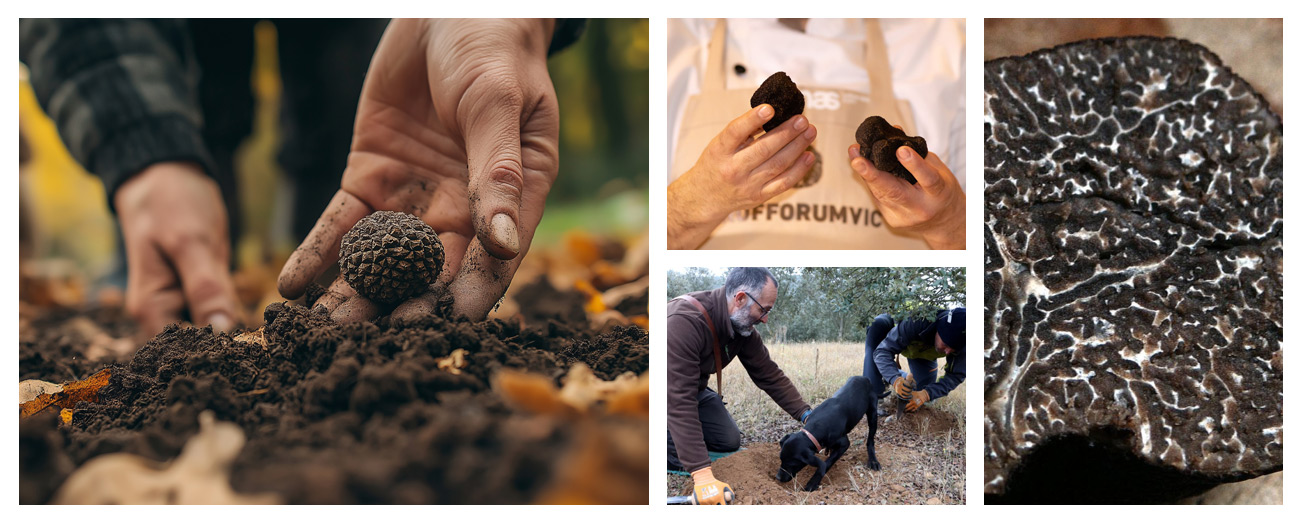
Around the crop, new activities emerge such as nurseries producing inoculated plants, companies marketing fresh truffle and truffled products, on‑farm tourism, mycological gastronomy, and outreach events to promote the product and the value chain. One example is Trufforum Vic, co‑led by CTFC and PROTOCAT with other organisations. Its first edition took place in Vic in 2019. Held annually during the black truffle season, Trufforum brings together the entire sector’s value chain with professional and public events throughout a single weekend.
Bioeconomy,
but with roots
The CTFC’s scientific and technical team has contributed rigorous studies, essential data and a solid support network, as well as promoting training and professionalisation within the truffle sector. This effort has driven a cultivation model that balances profitability with respect for the territory.
The case of the Association of Truffle Producers of Catalonia shows how research and innovation can transform the rural sector, opening the door to a future that is more sustainable, more resilient and full of opportunities. This commitment to science and territory will continue to guide and strengthen an activity that connects tradition, nature and development.