Skip to content

Areas /

Wood

Truffle

Aromatic and medicinal plants

Green chemistry

Pine nuts

Environmental planning and management

Innovation in forestry work

Services /

Product development

Advisory services

Training

Certification

Large‑scale project

Projects /

A building that paves the way: the case of the Forestry Hub

Bioproducts from Mediterranean forest biomass

Association of Truffle Producers of Catalonia

SAMBUCUS Cooperative

Wood and Innovation: the Transformative Force of the PRISMA Project

Soriguera: from agroforestry mosaic to resilient landscape

Recovery of Forests with MALWA Machinery

A building that paves the way:
the case of the Forestry Hub

When we conceived the Forestry Hub, we knew it was not just about constructing a building. We wanted to take a step forward, as a sector, as a territory, and as a driver of real change. 

From the Forestry Hub, promoted by the Forest Science and Technology Centre of Catalonia (CTFC), we have taken on the challenge of transforming the sector and activating richer, more sustainable, and more locally rooted value chains. 

To lead this transformation, we needed to lead by example. And that is exactly what this building represents: a living symbol of the change we want to see in our forests, our communities, and the economy that surrounds them. 

Why did we build
the Forestry Hub?

We built this space because the sector needs to embrace a new role: promoting the ecological transition beyond the forest itself.

Decarbonising economic sectors requires using natural resources wisely, and the forest bioeconomy plays a central role. But this transition is not simple. Forest owners, companies, and primary industries have a crucial role, but we knew they could not do it alone.

What was missing was an actor capable of connecting knowledge, territory, and implementation.

So we stepped forward. At CTFC, we are committed to turning knowledge into real impact.

We don’t just explain the model: we build it, test it, and share it.

Leaving the comfort zone of research and transfer to reach real implementation was essential. Constructing this building was our way of proving it. And today, it is still the space from which we continue to pave the way.

A building with values:
sustainability, bioeconomy and circularity

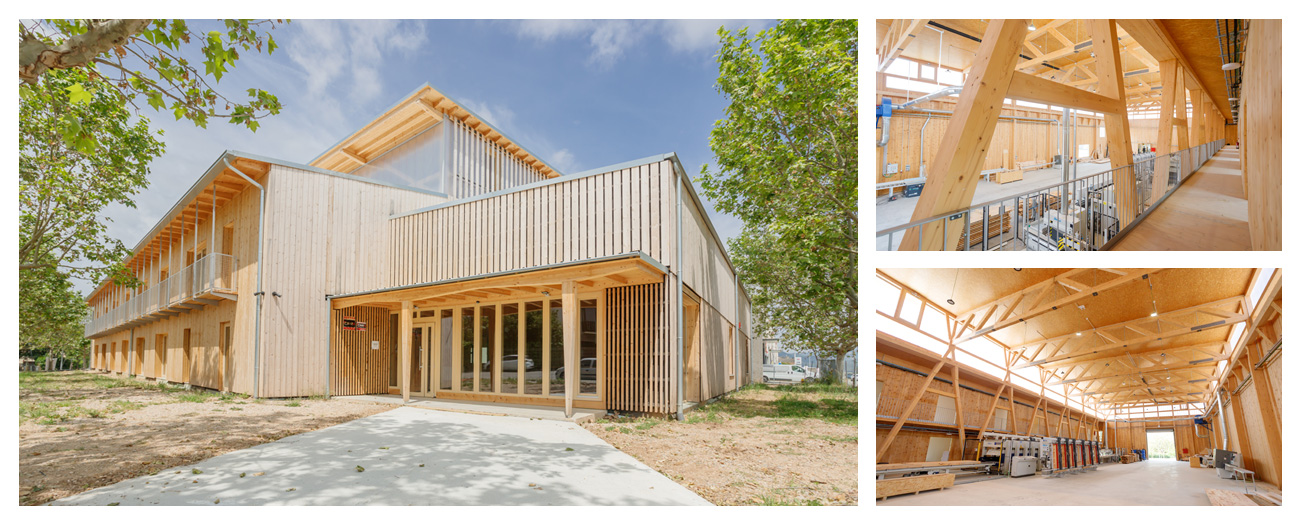
From the very first sketch, we were clear: if we want to promote a new way of building, we must embody it. That means using local wood, reducing the carbon footprint, and committing to energy efficiency, circular bioeconomy, and proximity.

We wanted to be credible, and we have achieved it.

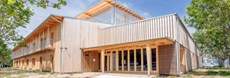
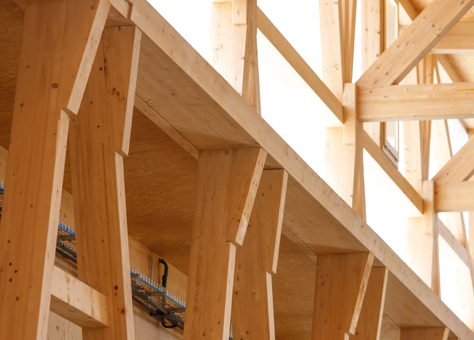
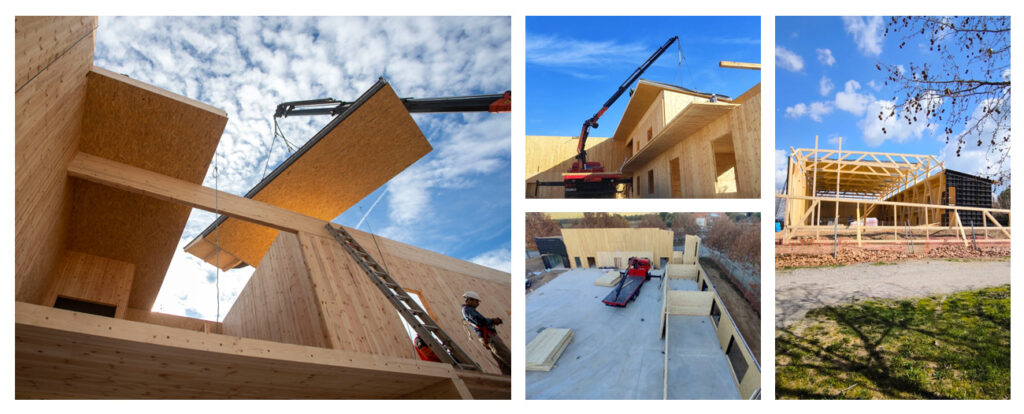
We have built a 3,900 m² building using cross-laminated timber from the Pyrenees, on land provided by the Olius City Council, with an investment of €3.8 million from the Climate Fund. The project meets strict environmental standards and aligns with Catalonia’s Bioeconomy Strategy.

Knowledge :
applied to the territory

Throughout the process, we applied what we know best: transferring applied science to real‑world projects.

With the experience of the INCAFUST group and collaboration with specialised architects, we selected sustainable materials and construction systems adapted to the Mediterranean context.

We also incorporated environmental criteria into public procurement, prioritising companies able to reduce CO₂ emissions in material production and transport. This approach has helped promote the use of local wood and lower the barriers to its integration in public works.

A construction, a major challenge

One of the biggest challenges was finding local companies with the capacity and availability to participate in such a specific tender, in a moment of intense activity in the construction sector.

The agility of our team, the coordination between contracting, legal, and management areas, and the full involvement of construction managers allowed us to overcome each obstacle.

We now place this experience at the service of others: we have opened a path that is now easier to follow.

A model
for the entire territory

The Forestry Hub model is replicable, scalable and adaptable.

Based on this experience, and with the support of experts with long-standing experience in the sector, we collaborate actively with the Government of Catalonia (through the Directorates-General of Forests and Mountain Policies), provincial councils and municipalities across Catalonia.

We also advise construction companies beginning their transition toward more sustainable models.

.

A unique building
for a limited time

Today, this building may still seem like an exception in the Mediterranean context.

But not for long. We are convinced that this type of construction will soon become the norm.

What truly makes the difference is not only the wood, it is the philosophy: a new approach to territorial development based on knowledge, commitment, and above all, action.

Share,
inspire,
collaborate

We have opened a new path in sustainable construction and the forest bioeconomy, and we want this path to be shared.

From the Forestry Hub, we make our team of experts available to accompany, advise and collaborate with institutions, companies, and communities that want to join this transformation.

Footer_logo_HUB

The Forestry HUB building, in figures

PRO_edificiHUB_icons_1

1.200 m2

of built space in Olius (Solsonès)
PRO_edificiHUB_icons_2

3,8 M€

million invested (Climate Fund)
PRO_edificiHUB_icons_3

4

local species used: Pinus uncinata, Abies alba, Pinus sylvestris, Castanea sativa
PRO_edificiHUB_icons_4

400

tons of carbon stored
PRO_edificiHUB_icons_5

800

tons of CO₂ emissions avoided by building with wood instead of cement

PRO_edificiHUB_icons_6

5

activity areas: structural wood, green chemistry, aromatic plants, show‑cooking and training spaces

A sensor network monitoring
environmental quality

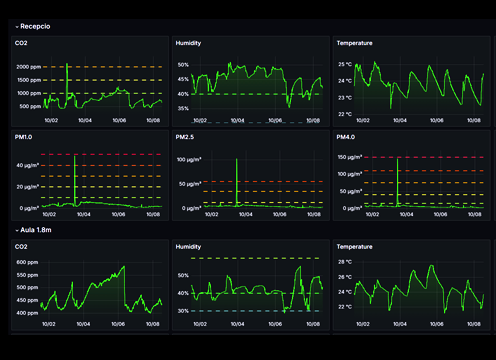
To advance the evaluation and improvement of wooden buildings, we installed a sensor network that monitors indoor and outdoor environmental quality and how wooden structural elements behave over time.

The devices measure CO₂, VOC (volatile organic compounds), Temperature, relative humidity, particulate matter (PM2.5) and nitrogen oxides (NOx).

Additional sensors record temperature and humidity between construction layers, wood moisture content, and sound pressure.

The system is installed both in the fully wooden Forestry Hub building and in the CTFC headquarters in Solsona, which contains only 30% wood, enabling comparison of indoor air quality and construction system behaviour in two very different building types.

The data will help improve and share best practices for sustainable wood‑based construction.