Projects /
Truffle
Truffle cultivation
in the Mediterranean
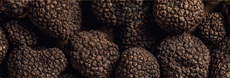
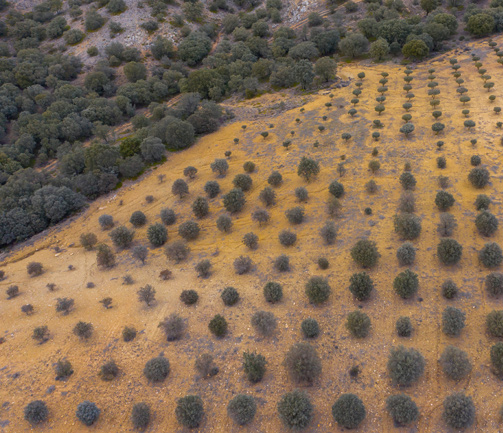
The black truffle (Tuber melanosporum) represents a major opportunity for our territory. Catalonia has excellent agroclimatic conditions for its cultivation, although much potential remains untapped. From the Forestry Hub, backed by research from the Forestry Science and Technology Centre of Catalonia (CTFC), we provide comprehensive advice for planting inoculated trees and marketing the truffle.
Our goal is to promote resilient landscapes. Truffle cultivation helps manage the Mediterranean agroforestry mosaic, reduces vulnerability to wildfires, and activates local economies. Our work focuses on improving the profitability, sustainability, and resilience of truffle production.
We work side by side
with the territory
We identify optimal locations, apply the best inoculation and planting techniques, and provide personalized agronomic monitoring. Our approach is always based on scientific knowledge adapted to rural needs.
We support producers throughout the entire process: soil and microclimate assessment, design of the cultivation system, technical plantation management, and harvesting and marketing.
We also work with public administrations interested in promoting truffle cultivation as a tool to increase territorial resilience.
New technologies
in truffle production
Methodologies developed by the CTFC have made it possible to achieve truffle production in just five years, significantly faster than the usual 8–10 year timeframe. This efficiency results from applied research, innovation, and sustainable management that strengthens the territory’s bioeconomy and enhances forest resilience in the face of climate change.
Our commitment
Our guidance begins with landscape‑scale analysis to determine the best areas for cultivation and enhance landscape resilience. Using soil maps and climate data, we identify the zones with highest productive potential. Catalonia has more than 160,000 hectares with potential, yet only around 1,500 hectares are currently cultivated.
This initial work is complemented by evaluation protocols for plants inoculated with black truffle, installation of irrigation systems and environmental sensors, continuous agronomic monitoring, and decision‑support tools to improve crop success.
We also provide practical training, technical workshops, and tailored resources to support small producers, so that they can develop their project with autonomy and technical criteria.
A living and profitable
landscape
Truffle cultivation creates economic value and contributes to a territorial bioeconomy. It enhances landscape mosaic, fosters biodiversity, stores carbon, and improves soil vitality, becoming a key tool for rural sustainability.
With more than 30 years of experience, the collaboration between the CTFC and the University of Lleida has validated cultivation systems that drastically shorten production times, even outside traditional truffle areas. The Forestry Hub brings high‑level research infrastructures and tools to rural communities through local demonstrations and tailored solutions.
Who we
work with?
At the Forestry Hub, we advise rural producers who want to diversify with a high‑value crop, cooperatives seeking to improve traceability and quality, agroforestry entrepreneurs committed to the local economy, and initiatives promoting resilient territorial models that connect innovation, tradition, and sustainability.
If you want to start or improve your truffle project, we provide scientific knowledge, technical expertise, and practical support to make it possible.
Come visit us and discover how truffle cultivation can become a green and profitable engine for the territory.