Skip to content

Areas /

Wood

Truffle

Aromatic and medicinal plants

Green chemistry

Pine nuts

Environmental planning and management

Innovation in forestry work

Services /

Product development

Advisory services

Training

Certification

Large‑scale project

Projects /

A building that paves the way: the case of the Forestry Hub

Bioproducts from Mediterranean forest biomass

Association of Truffle Producers of Catalonia

SAMBUCUS Cooperative

Wood and Innovation: the Transformative Force of the PRISMA Project

Soriguera: from agroforestry mosaic to resilient landscape

Recovery of Forests with MALWA Machinery

Soriguera:
from agroforestry mosaic
to resilient landscape

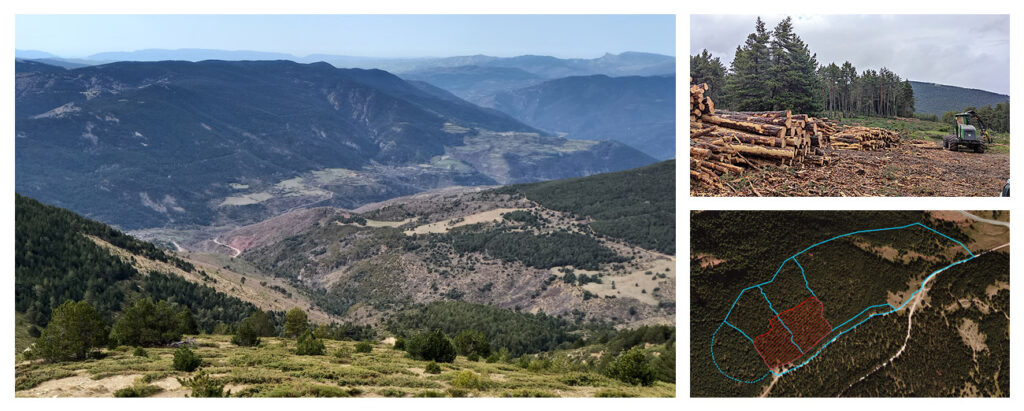
In the heart of Pallars Sobirà, the municipality of Soriguera has become a pilot site for rethinking territorial management by treating the landscape as a living infrastructure. With more than 70% forest cover and a strong agropastoral tradition, Soriguera is an example of how climatic and socioeconomic challenges can be transformed into new opportunities for territorial development. 

In recent decades, the municipality has experienced a progressive abandonment of cropland and pastures, a loss of the traditional agroforestry mosaic, and a significant increase in wildfire risk due to accumulated fuel. At the same time, the decline of agricultural and livestock activity threatens key ecosystem services such as water regulation and biodiversity conservation.

Towards a new model of
resilient landscape

Based on an exhaustive scientific analysis of the territory, including projections of forest dynamics, waterbalance estimates, fuel loads, agropastoral productivity and biodiversity data, experts defined a vision for the future: a dynamic, diverse, living and resilient agroforestry landscape. 

The project integrates three main pillars: 

Certificacio_UnCompromis_icon
Diversification and sustainable forest management. Three alternative silvicultural itineraries were designed for Soriguera’s main forest species—naturalistic, multifunctional, and coppice‑with‑standards—to promote mature, mixed, fire‑resistant forest structures.
Certificacio_UnCompromis_icon
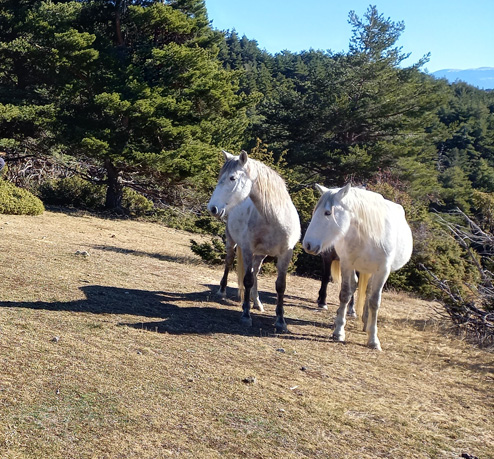
Revival of agro‑pastoral activity. More than 700 hectares were identified as having potential for recovering cropland or pastures. Extensive livestock farming was promoted as a tool to manage fuel loads and maintain open habitats.
Certificacio_UnCompromis_icon
Spatial optimisation tools. Priority zones were identified where combined actions maximise ecosystem services related to blue‑water provision, biodiversity conservation, wildfire‑risk reduction and agro‑pastoral production.

Soriguera, a living laboratory
of circular bioeconomy

Footer_logo_HUB

Territorial and social impact

Projections for the year 2050 show that the strategy applied in Soriguera generates tangible environmental and social benefits. Key expected results include:

PRO_Soriguera_Impacte_icon_1

+25% biodiversity‑hosting capacity

thanks to diversification of species, structural and land‑use diversity

PRO_Soriguera_Impacte_icon_2

–15% surface fuel load

significantly reducing sixth‑generation wildfire risk

PRO_Soriguera_Impacte_icon_3

Stable water availability

despite climate pressure, supported by the recovery of the agroforestry mosaic

PRO_Soriguera_Impacte_icon_4

Increased carbon‑sequestration capacity

through more mature and functional forests that contribute to climate mitigation.

In socio‑economic terms, the revival of agro‑pastoral activity and sustainable forest management promote:

PRO_Soriguera_Impacte_icon_5

Stronger territorial rootedness and population retention

by creating new local employment opportunities.

PRO_Soriguera_Impacte_icon_6

Generational renewal

in primary sectors and in landscape and forest management

PRO_Soriguera_Impacte_icon_7

Enhanced cooperation

among administrations, landowners, livestock farmers and managers of the Alt Pirineu Natural Park, consolidating a collective model of territorial governance

Altogether, these impacts confirm that Soriguera is moving towards a resilient landscape model, capable of combining ecological sustainability, economic viability and social cohesion

A living laboratory
of territorial bioeconomy

Soriguera has become a living laboratory where scientific knowledge, local management and innovation converge to build a resilient and productive landscape model.

The project demonstrates that rural development based on a circular bioeconomy is not only possible, but already emerging, where nature, community and economy reinforce one another.

Ecological sustainability,
economic viability and social cohesion

Certificacio_Aplicable_logo_HUB